

Primary & Secondary Education
Africa's finalists for the 2025 World’s Best School Prizes
Shan Radcliffe 29 Jul 2025
 | ||||||||||||||||||||||||||||||||||||||||||||||||||||||||||||||||||||||||||||||||||||||||||||||||||||||||||||||||||||||||
Meet the 5 African schools shortlisted for the World's Best School PrizesAfrican schools continue to be recognised on a global stage, with five pioneering institutions being shortlisted for the 2026 T4 Education World's Best School Prizes. The list of finalists was announced this morning, 25 June, by T4 Education founder and CEO, Vikas Pota. 25 Jun 2026 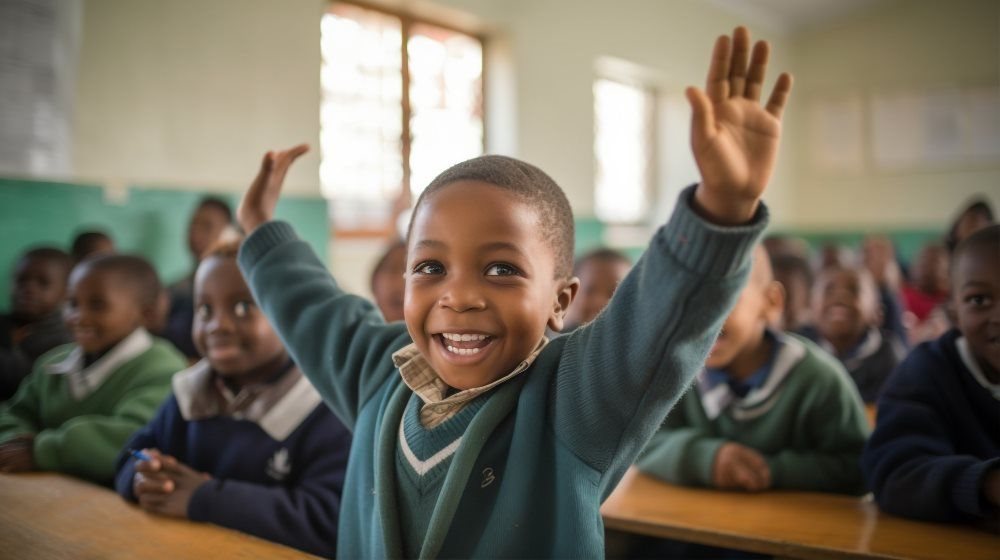 Image source: freepik from Magnific.com “The standard you set is the reason this prize matters,” said Pota. “We have studied your work and learned again how much is being built in places where the odds are not always on your side. What you are building is an inspiration to us all. “Each one has set an example the rest of the world should pay attention to.” The African shortlisted schools span two of the five prize categories. Nigeria’s Slum2School Green Academy and Uganda’s St. Kizito High School Namugongo are vying for the Environmental Action prize; while Africa dominates in the Overcoming Adversity category with the Pharo School Homosha (Ethiopia), Roshen Lakeview Academy (Kenya) and the Abaarso School of Science and Technology (Somalia) all featuring. Slum2School Green Academy (Nigeria)Located in the remote, water-locked community of Saga in Epe, Lagos State, the charity-run Slum2School Green Academy is a first-of-its-kind, climate-smart kindergarten and primary school providing 250 underserved children from eight riverine communities with access to formal education. Built from locally sourced bamboo and wood to withstand regional conditions, the self-sustaining, eco-friendly campus operates entirely on solar energy, harvesting up to 160,000L of rainwater annually and utilising a waste-to-biogas system. This innovative infrastructure serves as a living laboratory where students engage in practical environmental systems — such as converting water hyacinths into marketable products — while providing clean water, sanitation, and ecological awareness to more than 700 local families. Read more about Slum2School Green Academy here. St. Kizito High School Namugongo (Uganda)An independent secondary school in Uganda, St. Kizito High School Namugongo is tackling local environmental and health risks by equipping students to turn community waste into income-generating opportunities. Employing a hands-on, sustainability-led learning model, the school features student-led green circular clubs that meet four days a week to run initiatives that convert waste into usable products. Through an experiential, project-based "flipped-classroom" approach, students research local markets, forests, and slums before returning to class to design practical solutions. Using this model, they have learned to produce carbonised briquettes from bio-waste, create livestock feed from food waste, compost bio-fertilisers, and manage hydroponic farming systems, bridging the gap between academic theory and real-world entrepreneurship. This award-winning model has delivered significant environmental, financial, and educational impacts. The initiatives have cut the school's fuel costs by 25%, reduced livestock farming costs by up to 80%, and allowed hydroponic systems to supply the majority of the campus's vegetables. Furthermore, over 50 learners now fund their tuition through these green skills, while more than 100 have launched their own home-based eco-businesses. Read more about St. Kizito High School Namugongo here. Primary & Secondary Education Africa's finalists for the 2025 World’s Best School PrizesShan Radcliffe 29 Jul 2025 Pharo School Homosha (Ethiopia)Pharo School Homosha is a tuition-free, all-girls secondary boarding school in Assosa, Ethiopia, that is transforming lives by providing full scholarships to students facing poverty, displacement, and early marriage in one of the country's most underserved regions. While regional female enrolment can fall as low as 32%, Pharo School Homosha intentionally admits girls with lower entrance exam scores to focus on their potential, rapidly closing severe learning gaps. By combining the national curriculum with intensive Stem education and English-language development, the school utilises a high-performance learning model supported by continuous mentorship. This holistic approach has firmly establishing the academy as a top-performing secondary school in the region, while more than 15 student-led clubs — ranging from arts, music and sports, to science, robotics and Model UN — allows for further personal growth. Backed by strong local government partnerships and global volunteer networks, the school further demonstrates its commitment to equity and inclusion by extending its educational resources to nearby UNHCR refugee camps. Read more about Pharo School Homosha here. Roshen Lakeview Academy (Kenya)Roshen Lakeview Academy is an independent kindergarten, primary and junior secondary school in Port Victoria, Kenya, that is transforming a vulnerable fishing community by challenging generational cycles of poverty, flooding, early marriages, and a limited belief in education. Originally founded as a simple feeding programme, the academy has evolved into a top-performing facility implementing Kenya's competency-based curriculum. By combining direct instruction, digital literacy, and daily self-belief affirmations with sports and mentorship, the school empowers boys and girls to look beyond traditional roles in fishing and local markets. For the most vulnerable learners, Roshen Lakeview provides safe boarding facilities and emotional care, while ensuring teachers receive continuous professional development to support a holistic, project-based learning environment. With alumni consistently advancing to prestigious national secondary schools and scoring top grades on national examinations, Roshen Lakeview Academy serves as a powerful model for how underserved rural communities can use education to rewrite their futures. Read more about the Roshen Lakeview Academy here.  Abaarso School of Science and Technology (Somalia)The Abaarso School of Science and Technology is a non-profit boarding school in Somalia that unlocks life-changing opportunities for underserved youth, including those from remote, nomadic backgrounds. By combining rigorous academics, an intensive six-day schedule, and a full English-immersion environment, the school helps students overcome severe educational gaps, poverty, and isolation. Moving away from traditional rote memorisation, Abaarso's student-centered pedagogical approach emphasises inquiry, character growth, and leadership. Each year, thousands compete for just 40 to 50 slots via a free national entrance exam. The school’s impact is highlighted by its alumni network, where over 350 learners have gone on to study at elite global institutions like Harvard, MIT, and Oxford, securing more than $55m in scholarships. Remarkably, 90% to 95% of these students complete their degrees within four years — a historic achievement recognised by the Ministry of Education. This success has come full circle, as graduates increasingly return to Abaarso as mentors and educators, currently making up 30% of the faculty with a long-term goal of reaching 50%. Read more about the Abaarso School of Science and Technology here. All the finalists for the 2026 T4 Education World's Best School Prizes
The winners will be named in November. About Shan RadcliffeShan Radcliffe is the editor of Bizcommunity HR, Education and Legal. View my profile and articles... | ||||||||||||||||||||||||||||||||||||||||||||||||||||||||||||||||||||||||||||||||||||||||||||||||||||||||||||||||||||||||