 |
Natalia Rosa on why AI is making strategic communications more valuable than everArtificial intelligence is changing far more than the way organisations create content. It is reshaping how businesses are discovered, how reputations are built and, increasingly, how trust is earned. 20 Jul 2026 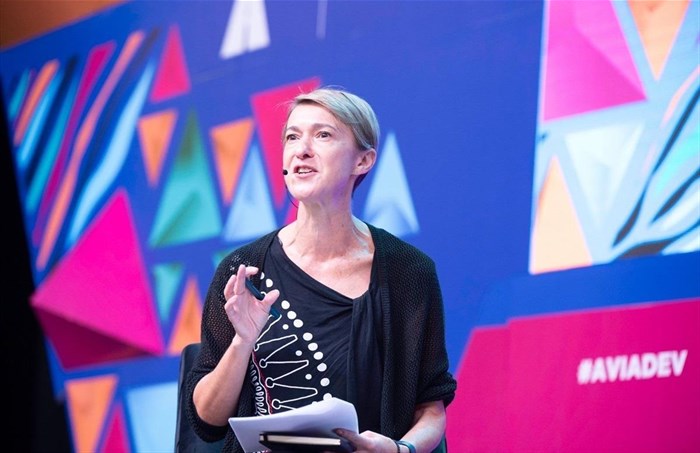 Source Supplied | Natalia Rosa, Founder and CEO, Big Ambitions A former journalist with a background in publishing, Natalia Rosa is the founder and CEO of Big Ambitions. She has spent more than two decades helping tourism businesses across Africa navigate communications, strategy and change. Much of her work explores the intersection of strategic communications, tourism and generative AI, while her doctoral research examines how the travel industry can use AI to strengthen, rather than replace, human value. Bizcommunity spoke to Rosa about why strategic communications is entering a defining moment, where human judgement still matters most, and why trust has become one of organisations' greatest competitive advantages. Could you tell us a little about yourself, your role, and the work you do at your organisation?I founded Big Ambitions more than a decade ago, and I still think of it as a company built to solve a particular problem: tourism businesses across Africa have world-class products and genuine stories, but often lack the strategic communications capability to connect with the markets they need. We exist to close that gap. I came into this from journalism and publishing, so words and narrative are where I started. Over time, the work has moved from content and PR into something broader: strategy, positioning, crisis communications and, increasingly, the question of how technology is reshaping who gets found and chosen in travel. My own role has changed too, and honestly, for the better. For years, the business depended too heavily on me. Today, a team I have worked with for more than a decade largely runs it, which frees me to focus on where I add the most value: making sense of what is emerging, translating complexity, and helping people act on it with more confidence. Much of my energy now goes into helping tourism professionals understand and apply generative AI practically, and into my doctoral research on the same question. The thread running through all of it is consistent: find what matters in the noise, and turn it into something people can actually use. What first drew you to a career in public relations, and what has kept you passionate about the profession?I should be honest that I have never thought of myself primarily as a PR person. I came from journalism, and what I do sits closer to strategic communications: shaping how organisations are understood, positioned and trusted, of which media relations is only one part. But that distinction is exactly what keeps me interested because I think the profession is evolving beyond "PR" as most people picture it and into something far more strategic. What drew me in was the realisation that communications, done well, is not decoration applied after the real decisions are made. It is a way of helping people understand a complex situation and act on it. I saw that most clearly during Covid-19, when a group of us in travel effectively became a verification-and-translation service for an industry drowning in changing regulations and fear. That was communications carrying real weight, connecting frightened people, cutting through the noise, and helping a fragmented industry find some common ground. What keeps me passionate is that the stakes are rising, not falling. In a world of information overload and AI-generated everything, the ability to establish what is true, position it clearly, and build trust around it is becoming more valuable, not less. That is a good time to be in this work. Why do you believe now is the golden age of strategic PR?I would put it slightly differently: I think this could be a golden age for strategic communications, but only if the profession claims the ground that is opening up rather than waiting to be handed it. Here's why the opportunity is real. For most of the digital era, the disruption in how customers found businesses was about where they searched: Google, then social media, then reviews and online travel agencies (OTAs). What is changing now is more fundamental. It is not about where people search. It is about who does the searching. Increasingly, a traveller describes what they want to AI, and an algorithm assembles the shortlist they choose from. Whoever shapes that shortlist shapes the decision. That shift moves the entire game onto communications territory. When a machine is reading everything written about you across the internet — your reviews, earned media and third-party mentions — and deciding whether to recommend you, reputation, narrative and trust stop being soft concepts and become the actual mechanics of being found. The things communicators have always worked on are now the things that determine commercial survival. So yes, the age is golden, but not because the profession has arrived. It is golden because the conditions have finally made the case for us. As AI becomes more embedded in communications, where do you think human judgement matters most?This is the question I spend most of my time on, and my honest answer is that we are not moving from human intermediation to AI intermediation. We are moving from visible intermediation to invisible intermediation. The traveller feels more in control, but they are still being guided. Only now, the guide is an algorithmic layer shaped by data access, commercial partnerships and trust signals. That makes human judgement more important, not less, but it relocates where it matters. AI is genuinely good at compression: finding options, drafting first passes, summarising and comparing the obvious. If your value is, "I can search and organise information," that value is weakening fast. What AI cannot do is carry responsibility, taste, advocacy, context, ethics or consequence. Human judgement matters most in the roles a machine cannot occupy: interpreting what someone actually wants, not just what they first asked for; knowing which option looks good online but disappoints in reality; advocating when things go wrong; applying an ethical lens to sustainability, animal welfare and overtourism; and holding relationships over years rather than one prompt. In communications specifically, it matters most in deciding what is true, what is worth saying, and taking responsibility for the consequences of saying it. AI can generate infinite plausible content. Judgement is knowing which of it should exist at all. In an era of misinformation, how do communicators build and maintain credibility?Slowly, and by being consistent, which is deeply unfashionable advice in a world that rewards speed and volume. The uncomfortable truth is that AI has made producing plausible content effortless, which means plausibility is now worthless as a signal of trust. So credibility shifts to the things that are hard to fake: a track record of being right, saying the same thing everywhere, and being willing to say what is inconvenient rather than only what flatters. I learned this concretely during Covid-19. Our value was not that we had information nobody else had. It was that we verified it, translated it into something usable, and people came to trust that if we said it, they could act on it. That trust was earned one accurate, useful message at a time, and it could have been lost in one careless one. There is a mechanical dimension too, now that machines are assessing us. AI reads for consistency and corroboration. If your website, listings and third-party coverage all say the same thing, you are trusted. If they conflict, you are quietly dropped. So consistency has moved from good practice to survival. Credibility, whether human- or machine-assessed, comes down to the same discipline: be accurate, be consistent, and be honest even when it costs you something. Do you think public relations is finally earning the strategic seat at the business table, or is there still work to do?There is still work to do. In much of the industry I work in, communications is not yet taken seriously as a strategic function. It is still too often the thing you call in after the decision has been made to write the press release announcing it. That is a waste and, given where things are heading, it is close to negligent. Here is why it should change. As AI becomes the layer between businesses and their customers, the assets that determine whether you are found, recommended and chosen are communications assets: your reputation, your narrative, the consistency of what is said about you, and the trust signals a machine reads before recommending you. Communications is quietly becoming the foundation on which everything else stands. A brilliant product that is poorly understood, inconsistently described and weakly trusted will simply not surface. So the seat at the table is not a matter of professional vanity. The decisions being made without communications in the room — about product, pricing, technology and distribution — increasingly determine communications outcomes, whether anyone acknowledges it or not. My view is that the profession will not be handed the seat. We earn it by demonstrating, in terms businesses care about, that this work determines whether you exist to your customer at all. The case has never been easier to make. We just have to make it. Looking ahead, what excites you most about the future of PR, and what skills will the next generation need?What excites me is that the ground has shifted in our favour, if we are willing to change with it. For years, communications had to argue for its own relevance. Now the technology itself is making the argument for us: trust, reputation and narrative are becoming the actual mechanics of being found and chosen. That is a genuinely energising position to be in. As for skills, I would put judgement first, above craft. The next generation will be able to generate content instantly and infinitely. What will set them apart is knowing what should be said, what is true, and what is worth taking responsibility for. Technical fluency with AI is now table stakes, not a differentiator. You have to understand these tools well enough to use them as a co-worker and well enough to know where they fail. Beyond that, the ability to translate complexity into clarity, which machines still do poorly; ethical reasoning, because someone has to decide what all this capability should and should not be used for; and the deeply human skills of listening, reading a room and advocacy will become even more valuable as everything else becomes automated. My advice to anyone entering this field is counterintuitive: learn the technology thoroughly, then double down on the parts of yourself that no technology can replicate. That combination is the whole game. Lastly, what's one misconception about PR that you'd most like to change, and why?That it is easy, and therefore that anyone can "just do" it—a belief AI has quietly made worse. I hear versions of "Can you just do a quick post?" or "Can you just write something up?" constantly. Underlying those requests is the assumption that communications is a task rather than a discipline. AI has amplified this because the tools now make the mechanical part—the drafting and producing—look effortless. If a machine can write the post in seconds, the reasoning goes, how hard can the job be? That gets it exactly backwards. The moment production becomes easy is the moment the actual value moves elsewhere: to the strategic judgement that decides what should be said, to whom, why and with what consequence. The writing was never the hard part. The hard part is knowing what is true, what is worth saying, how it will land, and being willing to own the result. So the misconception I would most like to change is the idea that communications is the doing. It is not. It is the thinking that decides whether the doing is worth anything at all. In an AI era, that is not a nice-to-have. It is the difference between an organisation that is understood and trusted, and one that is generating fluent, confident, forgettable noise into a void. About Robin FredericksEditor at Bizcommunity. View my profile and articles... |
