Youth Month highlights opportunities we inherit and create
Confidence Tshilande
The study, published in Nature Climate Change, showed how operational climate prediction tools can be repurposed to anticipate biological risks in near real time, providing the foresight needed as extreme heat events intensify worldwide.

By combining NASA’s GEOS-S2S subseasonal-to-seasonal forecasting system with long-term temperature histories for more than 30,000 mammals, birds, reptiles and amphibians, the team identified periods between May 2024 and February 2025 in which more than 3,500 species were predicted to encounter temperatures exceeding any they had previously experienced across their known ranges.
More than 1,250 of these species are already considered vulnerable, endangered or critically endangered, underscoring how climate extremes intersect with ongoing biodiversity decline.
Dr Christopher Trisos, director of the Climate Risk Lab at ACDI, said: “Most biodiversity predictions look decades ahead. This system works on the timescale of emergency management.”
The forecasts highlighted several global hotspots with both intense and extensive exposure.
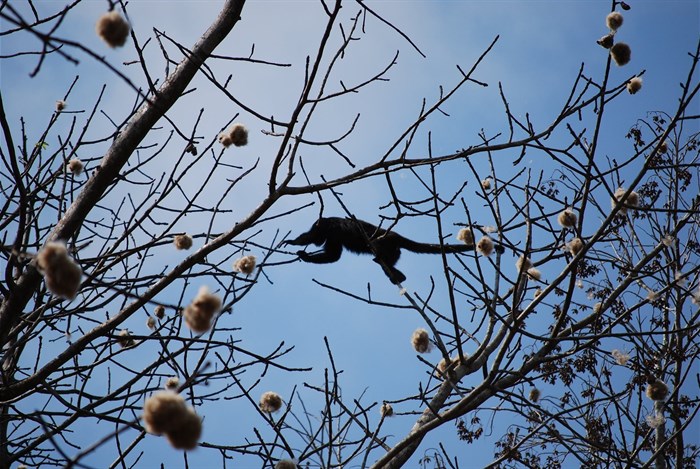
Mexico stood out as one of the most affected regions, particularly in the Yucatán Peninsula and the state of Tabasco, where documented heat-stroke mortality events in howler monkeys occurred during the same period.
Similar patterns of predicted exposure emerged across sub-Saharan Africa, including the Congo Basin, and throughout the Himalayan region, where 2024 temperatures approached or exceeded known physiological limits for many species.
Observations in India, Pakistan and Western Australia also aligned with these predictions, with reports of birds, bats and other wildlife succumbing to heat during the months identified by the model.
The early warning system does more than indicate where exposure is likely.
It also estimates how long species may remain under thermal stress and how far in advance the risks can be detected.
Many regions around the world would have received warnings between three and five months before the onset of maximum exposure, creating an actionable window to prepare monitoring programmes and deploy mitigation measures such as water provisioning, shade structures or emergency translocations.
The framework also generated a prioritisation of regions where surveillance and intervention may be most urgently required, offering conservation authorities a structured approach for allocating limited resources.
Dr Andreas Schwarz Meyer, a postdoctoral research fellow in ecology and evolutionary biology at UCT, said: “We applied climate forecasts that were designed for weather prediction to a completely different problem: anticipating biological risk.
“Seeing those predictions matching real mortality events on the ground gave us confidence that this tool can make a real difference for biodiversity conservation.”
The project brought together expertise from institutions across several countries, demonstrating the value of international collaboration in developing actionable tools to safeguard biodiversity under accelerating climate extremes.
Josep Serra-Diaz, researcher at the Botanical Institute of Barcelona, said: “Conservation has traditionally been reactive, responding after a crisis has already caused harm.
“With the ability to anticipate extreme heat months in advance, we can shift toward proactive protection of biodiversity.”
He added that the system represents a new generation of predictive ecological tools – ones designed to operate on timescales relevant for emergency response and rapid decision-making, rather than distant climate scenarios.