When we remember 16 June 1976, we often remember the photographs.
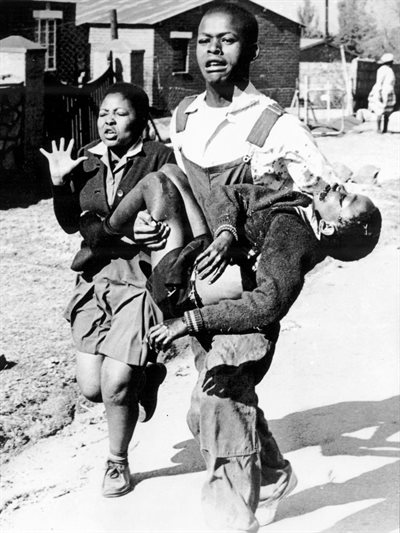
Mbuyisa Makhubu carries Hector Pieterson after Pieterson was shot and killed at the Soweto Uprising. Antoinette Sithol, Pieterson's sister, runs beside them. Image credit:
© Sam Nzima, via Wikimedia Commons
The images of schoolchildren moving through the streets of Soweto.
The courage etched onto their young faces.
The unrest, the sacrifice and the tragic loss that would come to symbolise one of the most defining moments in South Africa's history.
But history has a way of reducing movements to moments.
The legacy we often misunderstand
What happened in 1976 was never simply a protest against a language policy.
It was a rebellion against limitation itself. It was a generation of young people refusing to accept a future that had already been designed for them.
At a time when political power was inaccessible and economic opportunity was systematically denied, young South Africans stood at the centre of a struggle that would help reshape the nation.
Many of them were teenagers.
They possessed neither wealth nor influence in the traditional sense. What they had was conviction, a belief that their circumstances did not have to define their destiny.
That belief would become one of the most powerful inheritances ever passed from one generation of South African youth to the next.
Nearly five decades later, today's young people are navigating a vastly different South Africa, yet many still face barriers that continue to shape their futures.
The faces have changed, the landscape has changed, the struggle itself has changed and yet the resilience remains remarkably familiar.
A different battle, the same determination
Unlike the youth of 1976, today's generation was born into a democratic South Africa.
They inherited freedoms previous generations fought tirelessly to secure, yet freedom alone has not guaranteed opportunity.
For many young South Africans, the greatest challenge is no longer political exclusion but economic participation.
South Africa continues to face one of the highest youth unemployment rates in the world.
For millions, the promise that education would unlock opportunity has become increasingly uncertain.
Degrees have been earned, applications submitted, and interviews attended, yet countless talented young people remain locked out of meaningful economic participation.
Alongside unemployment exists a growing mental health crisis, rising living costs, widening inequality and the relentless pressure to succeed in an era where achievement is often measured publicly and consumed digitally.
This generation faces a unique paradox: They are more connected than any generation before them, yet many feel disconnected from opportunity.
And still, they persist.
Because resilience has become a language young South Africans speak fluently.
The evolution of influence
What makes today's youth remarkable is not merely their ability to survive adversity but their ability to transform it into influence.
While previous generations organised through marches, community meetings and political mobilisation, today's generation possesses tools unimaginable in 1976.
A smartphone can become a newsroom, a social media account can become a business, and a digital platform can become a movement.
The streets of resistance have expanded into digital spaces, creative industries, entrepreneurial ventures, classrooms, boardrooms and global networks.
This does not diminish the significance of past struggles; rather, it demonstrates how youth power evolves alongside society itself.
Modern South African youth are not only fighting for access.
They are fighting for visibility, representation, ownership and economic relevance.
They are also challenging outdated narratives about Africa while simultaneously creating new ones.
Every day, young people are building businesses from bedrooms, creating content that reaches global audiences, launching social enterprises that address local challenges and developing innovations that solve problems their communities face firsthand.
The methods have changed, but the mindset has not.
What 1976 truly left behind
The greatest connection between the youth of 1976 and the youth of today is not found in circumstance, but in spirit.
Both generations came of age during periods of profound uncertainty. Both encountered systems that restricted access to opportunity. Both faced moments when giving up would have seemed reasonable.
Yet neither generation accepted limitation as destiny.
The youth of 1976 fought for the right to imagine a different future. Today's generation is tasked with building it.
As South Africa commemorates Youth Month, perhaps the most important lesson we can take from June 16 is that influence has never belonged exclusively to those with power.
Throughout our history, it has often belonged to those willing to challenge what exists and imagine what could be.
The young people of 1976 inherited the struggle and transformed it into change. Today's youth have inherited that change and are transforming it into influence.
Their stories unfold differently, the tools are different, the challenges are different, but their resilience is unmistakably connected.
The inheritance left by the youth of 1976 was never simply freedom but courage and possibility. It was the belief that young people possess the power to shape the world around them.
Nearly 50 years later, that inheritance remains alive, not only in remembrance, but in every young South African who continues to create, innovate, lead, challenge and dream.
The march continues.
Only now, it moves through boardrooms, businesses, digital platforms, creative industries, classrooms and communities.
And once again, we are the proud youth leading the way.




