










Top stories

Marketing & Media#WPRD2026 | Muck Rack finds journalists are harder to reach despite AI advances
Karabo Ledwaba 4 hours



LifestyleAfrica’s football boom is creating value that local markets miss
Chigozirim Bodart 2 Jul 2026


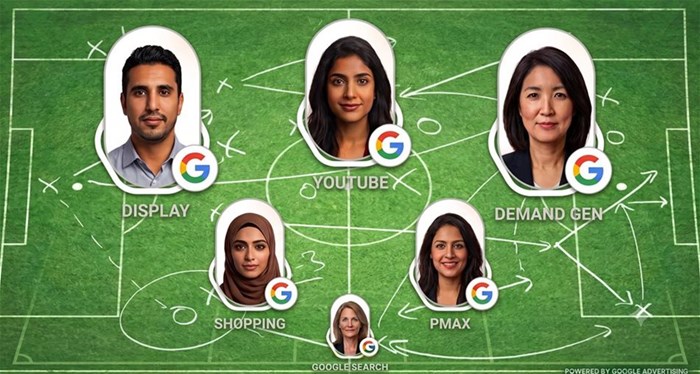
I want to tell you about a guy, Charles Reep. In the 1950s he became soccer's first data analyst, and his conclusion was that goals came from just a couple of quick passes: win it, play it forward, finish. Direct and simple. It shaped how a whole era played.
Watch a goal in today's World Cup matches and it looks nothing like that. It's built in stages. Keeping the ball, players pulling defenders out of position, movement off the ball, a dozen touches across the whole team before the ball ever reaches the striker. The player who taps it in gets the headline, but the goal was made long before that moment, by everyone.
Advertising today works the same way. The old idea, that one ad on one channel gets you the sale, is why the numbers dropped. These days, a customer finds you in one moment, remembers you in another, and buys in a third. The sale still shows up on one channel, but like the striker's tap-in, it was set up by everything that came before it.
That's the change: every channel has a job to do. Getting noticed and closing the sale aren't two separate campaigns anymore. They're one team, working in order, each step setting up the next.
Google is changing fast, and more of the decisions are being made by its AI, in places we can't fully see or control. Nobody knows the full picture yet of how it picks and shows your ads. That's exactly why this approach works right now. Instead of betting everything on settings that keep shifting, you get people interested first, close the sale second, and give the AI plenty of different ads to work with. It holds up while everything else is still moving.
Think of your advertising as two stages that hand over to each other.
Stage 1, Connect. Before you ask for anything, you earn attention. You show the customer you understand their problem better than they do. No hard sell. Just connection.
Stage 2, Close. Once people know you and want what you offer, you make the sale. Now the ads focus on getting them to act.
The mistake most marketers make is only doing Stage 2, pouring budget into search and shopping while wondering why it keeps costing more. It's a striker taking shots with no build-up behind him. Nothing has been set up, so every chance is harder and more expensive than it should be. The people who win build the play first, then finish.
How much you can do here depends on your budget, and it's where you build your edge if you can afford it.
If you have a large budget, this is what you add on top of your PMax and Search:
The job here is not to sell. It's to connect. Every ad should prove one thing: we understand your problem. When people feel understood, they remember you, and they come back ready to buy. Lead with the frustration, the thing they're stuck on. Save the pitch for Stage 2.
If your budget is smaller, say around R20,000, don't try to run a separate awareness layer. Put your money into PMax. It already reaches some of the same Demand Gen space, so it does a bit of this connecting for you while getting you set up. Add the pre-roll and Demand Gen ads later, once your budget grows.
Once people know you and want what you offer, you close the loop with:
Here the ads shift from emotional to practical. You've made your case, now you give them the reason to act: the offer, the proof, why now.
One useful thing to know about PMax: because it also uses Demand Gen and other Google spaces, a bit of awareness content isn't just allowed, it helps. Give PMax a mix, some of your Stage 1 connecting ads alongside your sharper sales ads, and the AI has more to work with.
Whatever your budget, the most valuable thing you can do is give Google many versions of your ads. Its AI works best with variety. The more good options you give it, the better it performs.
For each stage, that means making:
Make a spread of both the interest-building ads and the sales ads. Don't give Google one polished ad and hope. Give it a deep, varied set and let it find the combinations that work.
We're so sure this approach works that we're proving it on your account, for free.
We're giving 10 marketing managers in Johannesburg free management fees for 3 months. Here's the deal: you keep paying your normal R10,000 a month in Google Search Ads spend, and Adbot manages and optimises all of it for free for 3 months. In return, you agree to be part of a case study showing the results.
No catch. No upsell. Just 10 spots.
Book your demo here: https://adbot.zohobookings.com/#/lebosocial
10 spots only. 3 month challenge.

